Wildlife Droppings & Urine
Identifying and Safely Removing Animal Droppings
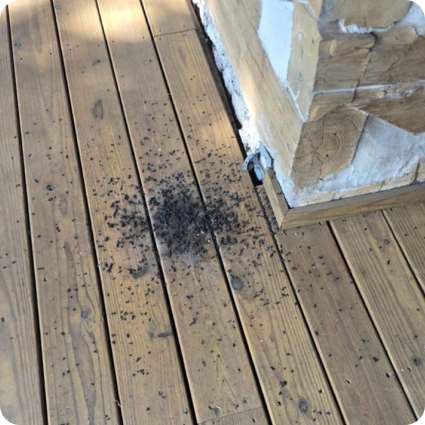
Finding feces in the home is a critical sign of persistent wildlife infestation and poses significant health risks. The pros at Black Diamond are trained to identify animal droppings to determine the source, whether it’s raccoon feces in the attic or smaller rodent droppings (mouse vs. rat). Distinguishing between raccoon, bat, squirrel, and bird droppings is key for effective wildlife removal and cleanup, as each type of feces can pose unique hazards. Bat Guano, bird, and rodent droppings, for example, can carry histoplasmosis spores, making proper identification and handling especially important. The presence of urine stains in the attic or walls, often from raccoons, is another clue.
Since rodent droppings are dangerous (yes, they carry pathogens), knowing what to do if you find animal droppings in your house involves immediate safety measures. Black Diamond pros always use protective gear and follow strict protocols on how to safely remove and disinfect areas contaminated by droppings from raccoons, bats, rodents, birds, and snakes.